Energy, Methane and Sustainable Infrastructure: UK–Rwanda Trade and Investment Forum
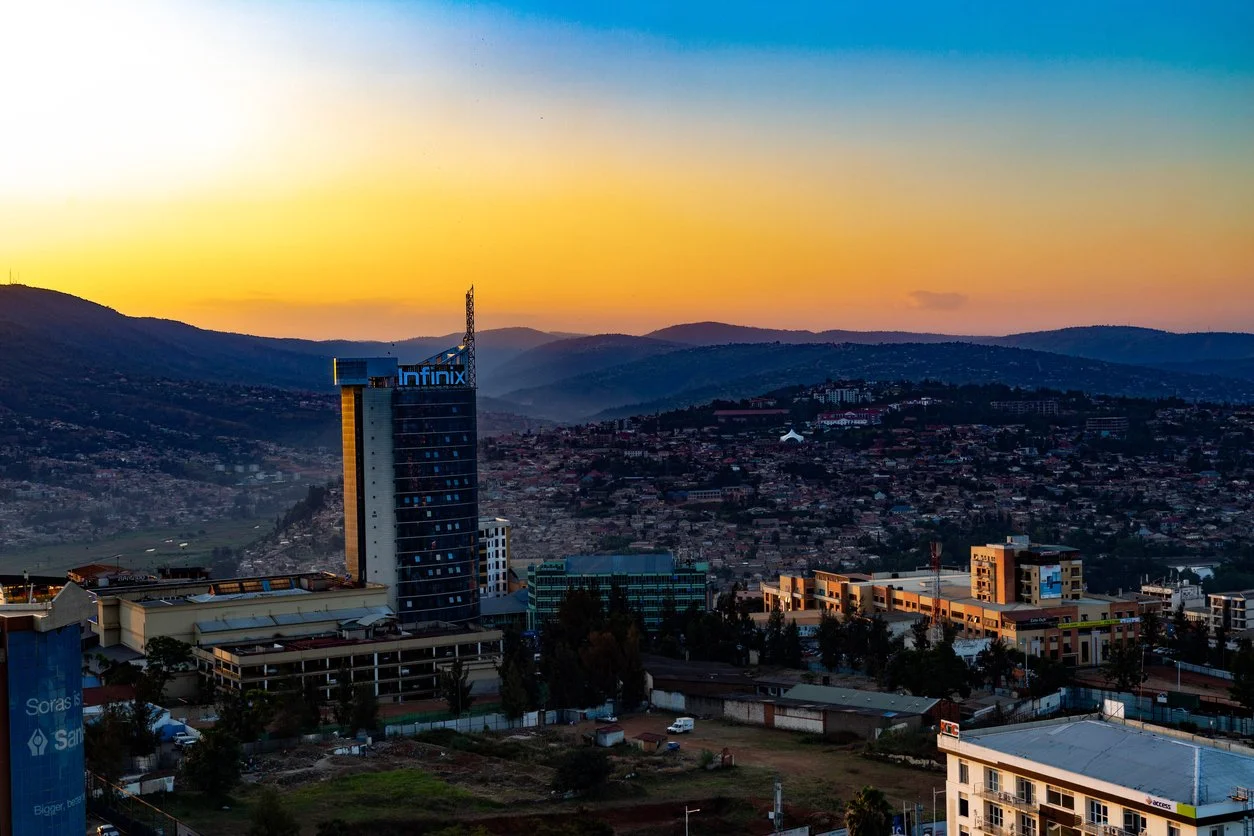
Following this week’s UK–Rwanda Trade and Investment Forum in London, much of the discussion understandably focused on investment, infrastructure and Rwanda’s broader economic development trajectory.
What stood out to me most, however, was the extent to which energy infrastructure remains central to long-term industrial growth across East Africa — not simply from the perspective of electricity supply, but from environmental resilience, public health and sustainable urban development.
One area that continues to stand out is the extraordinary potential of Lake Kivu.
Lake Kivu, which borders Rwanda and the Democratic Republic of Congo, contains vast reserves of dissolved methane and carbon dioxide trapped deep beneath the lake. While this represents a significant indigenous energy resource, it also presents a serious long-term environmental and geological challenge if left unmanaged.
The comparison frequently referenced in scientific discussions is the Lake Nyos disaster in Cameroon in 1986, where a sudden release of dissolved carbon dioxide from the lake resulted in catastrophic loss of life in surrounding communities.
While Lake Kivu is a very different and much larger system, the underlying principle remains important. Large concentrations of dissolved gases within stratified lakes require careful long-term management.
What makes Lake Kivu particularly interesting from an engineering perspective is that responsible methane extraction can potentially address multiple challenges simultaneously.
Firstly, methane itself is an extremely potent greenhouse gas if released unabated into the atmosphere. Capturing and utilising the gas for power generation can therefore create substantial environmental benefits relative to uncontrolled emissions.
Secondly, controlled gas extraction helps reduce the concentration of dissolved gases within the lake over time, contributing to broader long-term lake stability and risk management.
Thirdly, the methane represents a valuable domestic energy resource capable of supporting grid stability, industrial development and economic growth within the region.
This combination of environmental management and energy generation is particularly compelling because it demonstrates how infrastructure projects can deliver multiple societal benefits simultaneously when approached correctly.
Alongside discussions around Lake Kivu, another area that generated considerable interest during conversations at the forum was the role of biogas and waste-to-energy infrastructure within rapidly urbanising African economies.
In particular, the potential for landfill gas recovery and anaerobic digestion to support sustainable urban development deserves far greater international attention.
As cities grow, waste management becomes both an environmental challenge and an economic opportunity. Unmanaged landfill sites can create significant sanitation issues, local pollution and substantial methane emissions. However, when landfill gas is captured and utilised for energy generation, the same waste stream can become part of the solution.
This was an area discussed during conversations surrounding Rwanda’s longer-term development ambitions and the importance of integrating infrastructure planning with environmental management and urban resilience.
The benefits are not limited to electricity generation alone.
Well-managed waste-to-energy systems can contribute to:
improved urban sanitation
lower greenhouse gas emissions
reduced local air pollution
improved public health outcomes
more resilient urban infrastructure
domestic power generation capacity
Importantly, these technologies also align well with the realities of many developing economies because they utilise local waste streams and indigenous fuel sources rather than relying entirely on imported fuels or large-scale centralised infrastructure.
Too often, discussions around energy transition become overly simplified into binary debates around individual technologies. The reality is that long-term sustainable development usually depends on integrated systems thinking — combining energy generation, waste management, environmental protection and economic growth into a coordinated infrastructure strategy.
What struck me most during this week’s forum was the level of ambition surrounding Rwanda’s long-term development vision and the recognition that infrastructure investment must support not only economic growth, but broader societal resilience.
As African economies continue to urbanise and industrialise over the coming decades, I believe distributed energy systems, waste-to-energy infrastructure and flexible generation technologies will play an increasingly important role in supporting sustainable growth across the continent.