Waste, Cities and Energy Security: Reflections on Sustainable Infrastructure in India
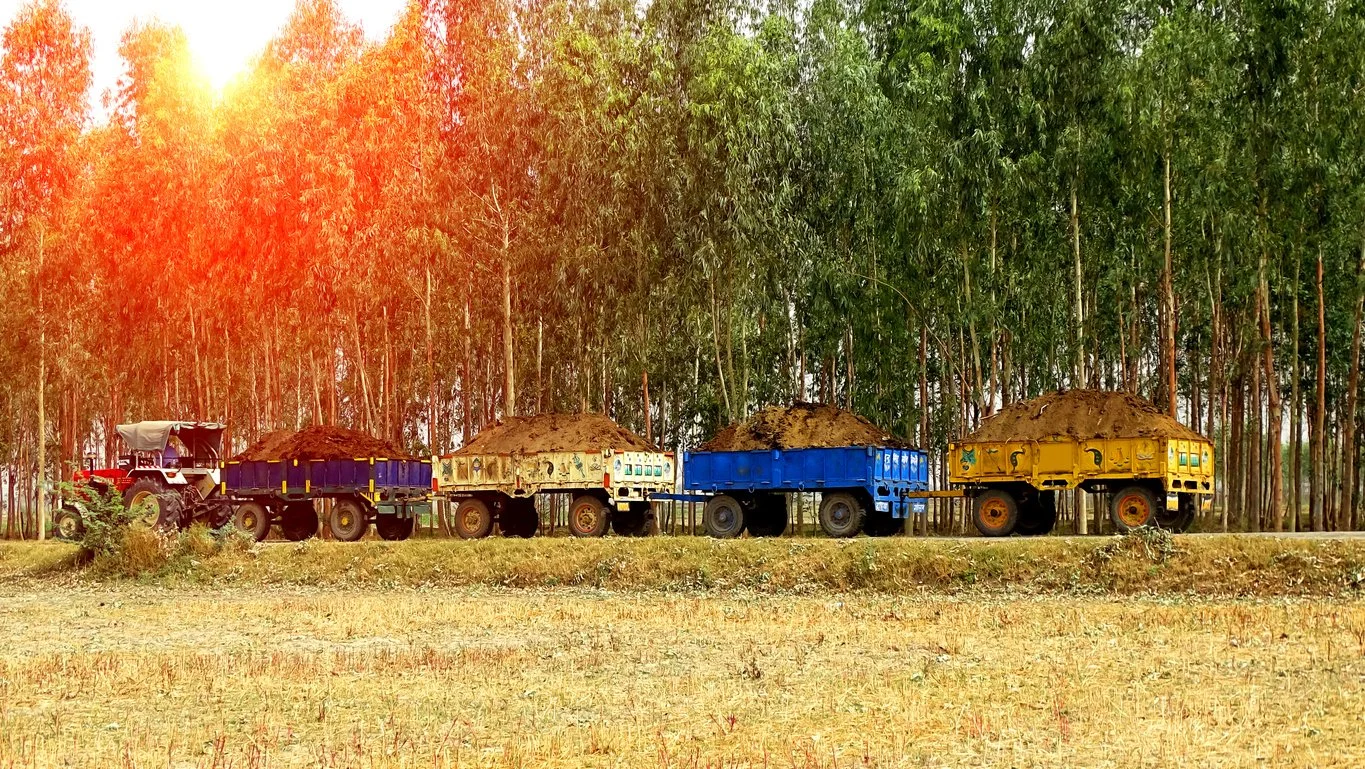
The publication of our recent white paper examining sustainable municipal waste management and anaerobic digestion in India with Clarke Energy and the UK India Business Council has given me an opportunity to reflect on how closely linked energy, sanitation, urbanisation and environmental resilience really are.
Too often, these areas are discussed independently.
Energy policy sits in one conversation. Waste management in another. Urban development somewhere else entirely.
In reality, they are deeply connected infrastructure challenges.
One of the strongest impressions throughout the development of this work was the sheer scale of both the challenge and the opportunity facing India. Rapid urbanisation, industrial growth and rising living standards are placing enormous pressure on cities, utilities and public infrastructure. At the same time, the country is generating vast quantities of municipal solid waste every year, much of which remains underutilised as a resource.
What struck me repeatedly was how often waste is still viewed purely as something to dispose of, rather than something capable of contributing positively to wider infrastructure systems.
Organic waste streams contain energy.
If unmanaged, they generate methane emissions, sanitation issues and long-term environmental problems. If managed correctly, they can instead support electricity generation, biomethane production, fertiliser recovery and improved urban resilience simultaneously.
That changes the conversation significantly.
Throughout the paper, we explored the role anaerobic digestion could play within India’s evolving waste management infrastructure. While no single technology provides a universal solution, biomethanation appears particularly well suited to many of the realities associated with India’s municipal waste profile, especially given the high moisture content and mixed nature of much of the waste stream.
This is important because infrastructure solutions only succeed when they reflect operational realities on the ground.
There is often a tendency globally to discuss energy transition in abstract or idealised terms. But practical infrastructure development rarely works that way. Technologies have to align with local conditions, available resources, planning frameworks and economic constraints.
In India’s case, there is a strong argument that distributed waste-to-energy systems can deliver benefits far beyond electricity generation alone.
Well-managed anaerobic digestion systems can reduce landfill dependency, improve sanitation outcomes, lower uncontrolled methane emissions and create valuable renewable gas resources. They can also contribute toward local power resilience and support combined heat and power applications where suitable infrastructure exists.
What I found particularly interesting during the research process was how closely waste management links to broader questions around sustainable urban development.
As cities expand, infrastructure pressures compound quickly. Waste collection, air quality, sanitation, public health and energy demand all become increasingly interconnected. The most effective long-term solutions are therefore rarely isolated technologies. They are integrated systems designed to solve multiple problems simultaneously.
This is one reason why I believe biogas and resource recovery infrastructure remain undervalued globally.
The discussion is too often reduced to a narrow comparison around electricity pricing or generation efficiency. In practice, the broader societal value can be far greater when environmental improvement, methane reduction, sanitation, agricultural recovery and urban resilience are considered together.
The paper also highlighted the significant barriers which still exist, including waste segregation challenges, financing constraints, policy coordination and the lack of long-term planning frameworks. These are not trivial issues and will require sustained collaboration between government, municipalities, industry and infrastructure developers if meaningful progress is to be achieved.
Encouragingly, there does appear to be growing recognition of the importance of sustainable waste infrastructure within India’s broader development strategy. Given the pace of urbanisation and the country’s long-term energy requirements, I suspect this area will become increasingly important over the coming years.
For me personally, the work reinforced a broader point which extends well beyond waste management alone.
Infrastructure decisions should not be evaluated purely through a single lens.
The best long-term systems are usually the ones capable of balancing resilience, environmental performance, affordability and practicality together. Achieving sustainable growth requires infrastructure capable not only of meeting today’s needs, but adapting over time as technologies, markets and environmental pressures evolve.
In many respects, that may be one of the defining engineering challenges of the coming decades.